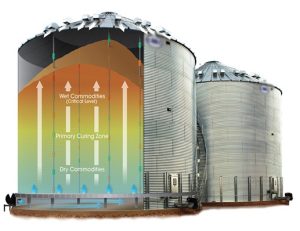
I have been interacting with the food grain management fraternity for the past ten months and have consistently raised concerns regarding the use of aeration in grain storage. I am taking this opportunity to highlight an important issue by sharing the attached illustration.
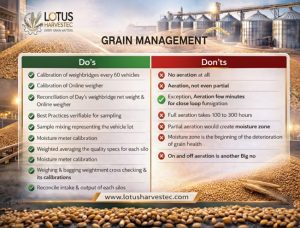
One of the major drawbacks of aeration is the formation of a wet zone within the grain mass. This wet zone can be identified through the temperature monitoring system installed in modern storage facilities. As the aeration process continues, the wet zone gradually moves upward through the grain bulk.
During this movement, the temperature sensors located in that zone record lower temperatures compared to the average temperature of the surrounding sensors. This variation clearly indicates the presence of moisture concentration within the grain stack.
It is not difficult to understand the potential damage such a moisture-rich zone can cause. Excess moisture may lead to spoilage, fungal growth, and deterioration of grain quality, ultimately affecting storage efficiency and food safety.
The diagram below illustrates how the moisture zone shifts upward during continuous aeration. Therefore, it is essential to complete the aeration cycle properly to ensure that the moisture zone is eliminated and the grain mass stabilizes uniformly.