The concluding Chapter 12 of my book Rice Technology, titled “Commercial Aspects of Milling Business,” focuses on the fundamental business principles of rice milling. While these concepts are generally well understood within the business community, they are often overlooked by technical professionals like myself.
Interestingly, I once had a discussion with a seasoned businessman on this subject. To my surprise, after reviewing these basic principles, he revisited and restructured his approach—and is now reaping significant rewards. This experience reinforced my belief that even fundamental commercial insights, when applied correctly, can drive meaningful results.
I continue to emphasize the importance of these concepts to commercial professionals and investors in the rice industry.
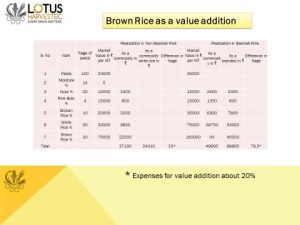
A major opportunity lies in value addition. Significant potential exists in by-products such as rice bran, paddy husk, and brown rice. With focused investment in commercial research and development, these segments can generate enhanced margins and long-term profitability.
While the basmati segment has already leveraged value addition effectively, there remains tremendous untapped potential in the non-basmati sector.
In this context, I am sharing a representative and indicative calculation sheet highlighting the value addition potential of brown rice. This serves as a starting point for further exploration and investment decisions.
The figures are tentative but illustrate the scope clearly—value lies not just in milling, but in how intelligently we utilize every output of the process.