
A hot topic of discussion across various groups, electronic media, and social media today is the issue of the “non-fitness” of food brands and high-end restaurants for human consumption.
The news and discussions of the past few weeks took me back to the beginning of my professional journey as a technician in Basmati rice milling.
In 1986, India was desperately looking to increase its milling capacity while simultaneously improving agricultural productivity in paddy fields. Increasing field production brought its own challenges, including fungal contamination and concerns related to aflatoxins. These challenges required the industry to continuously improve agricultural and post-harvest practices.
Modernization of the parboiling process also brought another challenge—“musty smell” in rice. Through technological improvements and process optimization, this issue was eventually overcome.
As the industry continued its efforts to increase field yields and production of Basmati rice, another major concern emerged: pesticide residues.
The Basmati rice exporters took these challenges head-on and worked towards resolving them. The motivation was primarily commercial—improving profitability, increasing export volumes, and protecting market access. However, the solutions developed in the process eventually contributed to a much stronger culture of quality, food safety, and process control.
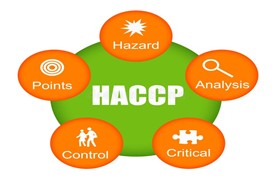
Over time, the food industry faced increasingly stringent scrutiny from international markets. This led to the adoption and implementation of structured quality and food-safety systems such as ISO 9000 and HACCP.
I personally had to train myself in these systems and was fortunate to receive training from one of the best professionals at SGS in 2002. I subsequently became a certified Lead Auditor, a qualification I held for three years. I still recall those days with great pride, as they played an important role in shaping my professional approach towards the food industry.
From Compliance to Prevention
Technology has evolved significantly since 2002, and I firmly believe that the challenges the food industry is facing today can become an opportunity to create substantial value.
These challenges can encourage the industry to improve its processes, reduce wastage, enhance margins, increase volumes, and ultimately contribute more significantly to the country’s GDP.
Being a typical technician with an aptitude for commercial science, my transition into rice milling through the prism of ISO and HACCP helped mature my professional approach. It eventually led me to design future projects around one fundamental philosophy:
“Prevention is Better Than Cure” (PIBTC).
The PIBTC approach made my professional life easier because it shifted the focus from correcting problems after they occurred to preventing them from occurring in the first place. It also created the time and freedom to focus on innovation.
I believe the same philosophy can now help the broader food industry.
The current challenges should not demotivate the food industry fraternity. Instead, they should encourage the industry to raise the bar, rethink processes, embrace technology, and convert challenges into opportunities.
If a traditional and highly competitive industry like Basmati rice milling could rise to the occasion and overcome challenges related to contamination, pesticide residues, processing, quality systems, and international compliance, I am confident that today’s food industry can overcome its current challenges even faster.
My Suggestions from Two Decades of Experience in the Food Industry
Based on my experience, I would recommend the following:
1. Source ingredients from HACCP/ISO-certified vendors
Supplier qualification and continuous vendor evaluation should become an integral part of food-safety management.
2. Conduct frequent training on HACCP and ISO principles
Food safety is not a one-time training exercise. Regular training, refresher sessions, and practical demonstrations should become part of the organizational culture.
3. Think out of the box to reduce wastage
Food safety and profitability should not be viewed as separate objectives. Better process control can simultaneously reduce wastage, improve quality, and increase margins.
4. Introduce voice-based activity recording
Digital and voice-based recording of operational activities can improve traceability, accountability, and documentation while reducing dependence on manual records.
5. Use AI for sequential corrections and process improvement
Artificial Intelligence can help identify recurring deviations, analyze process data, recommend corrective actions, and support preventive decision-making.
6. Make training, retraining, and group discussions a continuous process
Regular training sessions, retraining programs, and even weekend group discussions can help employees understand problems collectively and develop practical solutions.
The Opportunity Behind the Challenge
The only constant is change.
Every major challenge faced by an industry has the potential to create new technological and commercial innovations. The current food-safety concerns should therefore be seen not merely as a threat but as an opportunity to build a stronger, safer, more efficient, and more transparent food industry.
My journey from Basmati rice milling to quality systems and project design has taught me one important lesson:
When an industry chooses prevention over correction, challenges become opportunities for innovation.
If the Basmati rice industry could raise its standards in response to global challenges, I am confident that the wider food industry can do the same—and do it faster.
The future belongs to those who do not merely respond to change, but prepare for it, prevent its consequences, and innovate ahead of it.

By Professor Munishwar Vasudeva
Director, Lotus Harvestec Pvt. Ltd.